 KES
 UGX - Uganda
 TZS - Tanzania
 RWF - Rwanda
 NGN - Nigeria
 ZAR - South Africa
 USD - Zimbabwe
 GHS - Ghana
 ETB - Ethiopia
 ZMW - Zambia
 USD - International

Owning rental property in Kenya can be a steady source of income, but only if rent comes in on time and the paperwork keeps up. Whether you own a few bedsitters in Kasarani or manage apartment blocks in Kilimani for other owners, the same jobs repeat every month: invoice rent, collect it, chase arrears, fix what breaks and report to the owner. These tips will help you run it like a business.
Deposits held, deposits settled
Deposits cause more disputes than rent. Record how much was received, when and how, and keep it visible on the tenant’s account for the whole tenancy.
At move-out, settle the deposit against any unpaid rent or agreed damage on a final statement, so the tenant can see exactly what was deducted and why.
Set up every property and unit once
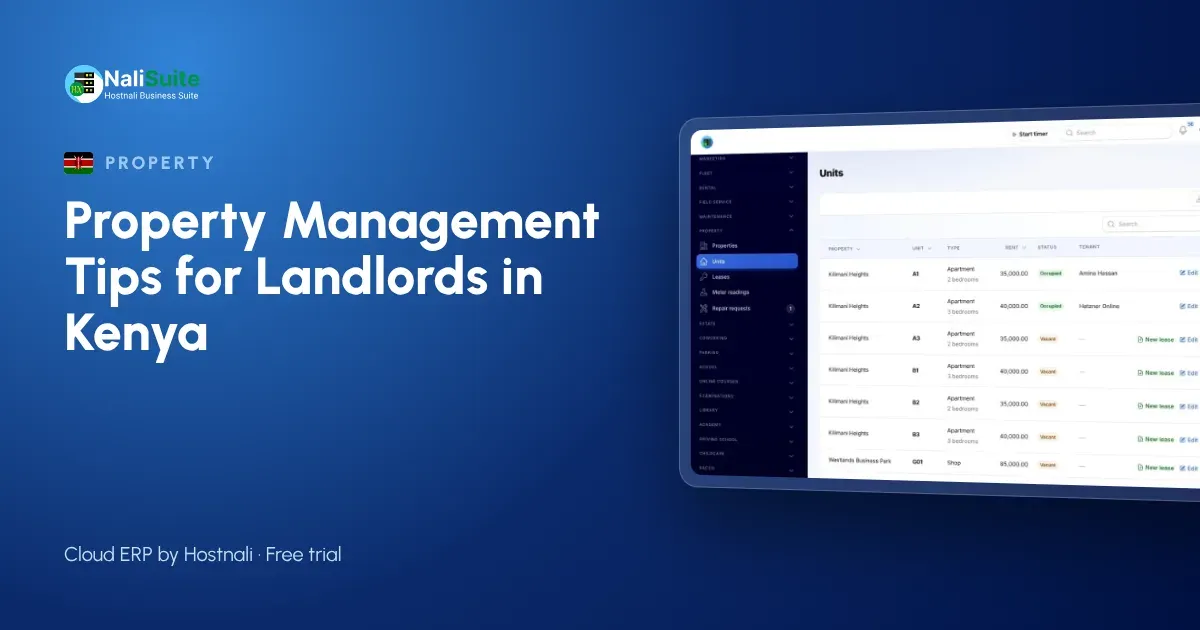
Start by listing each building and every unit in it: flat, room, shop or office. Record the size, the rent, any service charge and whether it is let or empty.
With that in place you can see occupancy at a glance, and every invoice, payment and repair has a home. Empty units stand out immediately instead of hiding in a spreadsheet.
A worked example: twelve units in Ruaka
Take a landlord with a twelve-unit block in Ruaka. Tenants pay rent by M-Pesa to a paybill, some on the first, some on the tenth, and a few in two parts. Water is billed from sub-meters. The caretaker used to keep a book and the landlord a spreadsheet, and the two rarely agreed. With each unit set up once, rent and water billed automatically every month, and M-Pesa payments matched to the right tenant, the landlord sees in one screen who has paid, who is late and by how much.
Invoice rent automatically
Stop writing rent invoices by hand. Set each unit’s rent and charges once and let invoices go out every period, with part months worked out when a tenant moves in mid-month.
Every invoice carries a pay link, so tenants can pay by M-Pesa, Airtel Money, card or bank transfer, and the payment is matched to their account.
Collecting rent by M-Pesa
Most Kenyan tenants pay rent by M-Pesa. Ask every tenant to use their unit number as the reference, and record which phone numbers belong to which tenant, so payments from a spouse or employer still land on the right account.
If you are a managing agent, keep each owner’s properties and statements separate, and send owners a monthly statement showing rent collected, expenses paid and the balance due to them.
See who owes what, and for how long
An arrears report shows each tenant’s unpaid balance and how old it is. Check it weekly, call anyone more than a few days late and agree a plan in writing if they are struggling.
The longer a debt is left, the harder it is to collect. Early, friendly contact recovers more than late, angry contact.
Repairs and the tenant portal
Tenants can report repairs, see their invoices and download statements from a portal, instead of calling you at night.
Every request is recorded against the unit with its status, so nothing gets lost between you, the caretaker and the contractor.
Check-in and check-out records
Write down the state of every room, fitting and appliance when a tenant arrives, and keep photos with the lease. Note the meter readings and the keys handed over.
When the tenant leaves, compare the unit with that record, read the meters again and prepare the final statement with any agreed deductions from the deposit.
The tools behind the routine
In NaliSuite, the Property Management add-on keeps units, leases, deposits and rent together, bills utilities from readings and tracks arrears. Recurring invoices run on the same schedule engine as Subscriptions.
For estates, the Residents’ Associations add-on adds levies, gate passes, notices and AGM votes; if you rent out halls or equipment, the Rental add-on manages bookings and deposits. See how they fit together on the property managers page.
Statements for owners and for yourself
If you manage property for others, send each owner a monthly statement: rent invoiced, rent collected, expenses paid and the balance due to them.
If you are the owner, the same report tells you which properties earn their keep and which need attention.
You also hold tenants’ IDs, phone numbers and payment records. Keep them secure and use them only to manage the tenancy, in line with the Data Protection Act, 2019, overseen by the Office of the Data Protection Commissioner.
Frequently asked questions
Can tenants pay rent by M-Pesa?
Yes. Every rent invoice carries a pay link for M-Pesa, card or bank transfer, and payments are matched to the tenant’s account.
Can I bill water from meter readings?
Yes. Enter the readings for each unit and water is added to that month’s invoice with the reading shown, so tenants can check it.
Can tenants see their own statements?
Yes. Tenants can log in to the customer portal to see invoices, payments and their balance, and to report repairs.
What does it cost?
NaliSuite plans start from Ksh 250 a month with a free trial; the Property Management add-on is added to any plan.
Try NaliSuite
Begin with your most troublesome property, the one with the most arrears or repairs, and see the difference in the first month of a free trial. View plans and prices.