 KES
 UGX - Uganda
 TZS - Tanzania
 RWF - Rwanda
 NGN - Nigeria
 ZAR - South Africa
 USD - Zimbabwe
 GHS - Ghana
 ETB - Ethiopia
 ZMW - Zambia
 USD - International

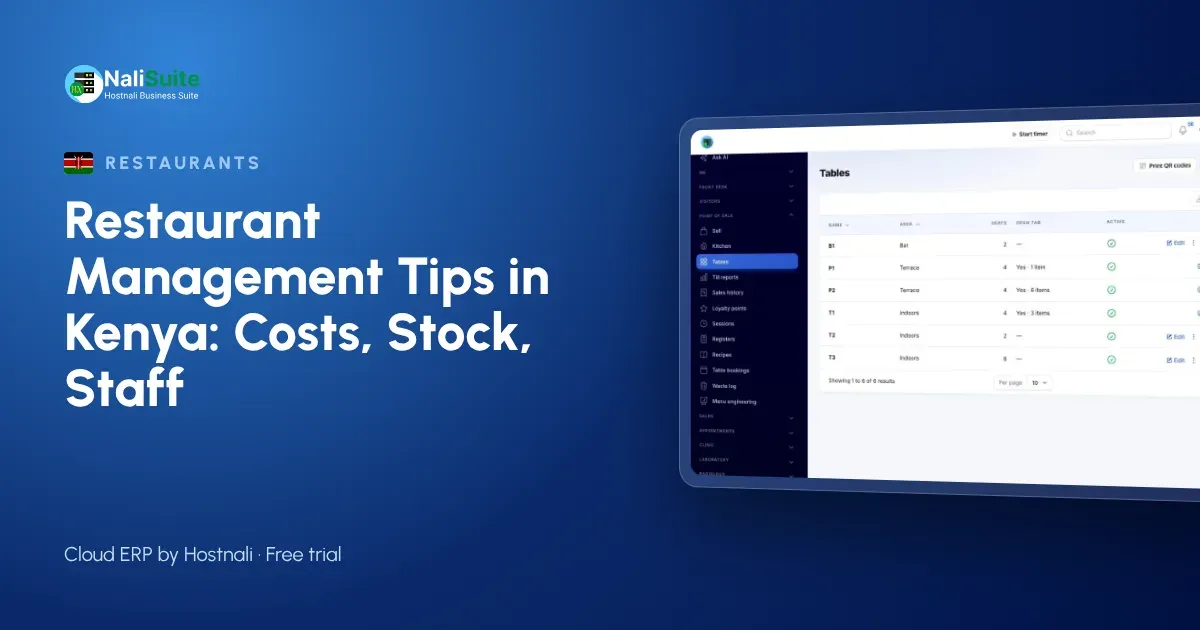
Kenya’s food scene runs from nyama choma joints in Nairobi to seafood restaurants in Mombasa and busy hotel kitchens in Nakuru. Margins are thin everywhere, so the restaurants that last are the ones that know their food cost and control their store room.
Example: a nyama choma restaurant in Nairobi
Picture a busy grill in Kilimani that sells nyama choma, ugali and kachumbari to office crowds at lunch and families on Sundays. Meat is bought daily, and the owner noticed that meat purchases kept rising while sales stayed flat.
They wrote recipes with portion weights for each dish, so every plate sold takes its meat, maize flour and vegetables out of stock. A weekly count against the expected stock showed that portions on the grill were growing during the Sunday rush. Weighing portions fixed the gap, and the plate cost of the signature platter is now known to the shilling.
Recipes first, prices second
A menu price is only right if you know what the dish costs to make. Write a recipe for each dish with exact quantities, keep ingredient prices current, and review the cost whenever a supplier raises prices.
With the Restaurant Pro add-on, every dish is linked to a recipe, and you see its plate cost and food-cost percentage. The menu engineering view, with dishes sorted into stars, plowhorses, puzzles and dogs, tells you where to focus: promote the stars, re-price the plowhorses and rethink the dogs.
Ingredient stock that keeps itself up to date
Every dish sold uses ingredients. In Restaurant Pro, ingredients come out of stock each time a dish sells, so your Inventory shows what you should have without a nightly count.
Do a physical count once a week and compare. If the difference is large, look at three things: portions, waste and security. The add-on’s waste log records spoiled or dropped food with a reason, which separates honest waste from missing stock. When ingredients run low, raise a purchase order in Purchases so suppliers deliver before you run out.
Run the floor from the till
A clear system on the floor saves arguments at the end of the night. Open each table on the till, add dishes as they are ordered, and close it when the guests pay.
The Point of Sale app supports restaurant tables, split payments and receipts by SMS or WhatsApp. With Restaurant Pro you can also take table bookings, which helps the kitchen prepare for the evening rush.
Keep selling when the network drops
A restaurant cannot tell hungry customers to wait for the internet. Use a till that works offline and uploads sales safely later: that is how NaliSuite’s offline POS behaves, and it runs in the browser on the devices you already own.
Let customers pay by cash or M-Pesa or Airtel Money, and record each payment on the sale. At closing, the till’s takings can be checked against the cash and payments received. The payments feature explains how the money is matched.
Kenyan details
Customers expect to pay by M-Pesa at the table, so make sure your till can send an M-Pesa prompt and record the payment against the bill. Your receipts and invoices are also tax records: NaliSuite provides the connection for KRA eTIMS using the credentials you get from KRA.
If you also bake, cater for events or supply other outlets, the Food production add-on handles recipe costing at scale, daily production plans and catering quotes with a deposit invoice.
A simple weekly routine
- Monday: review plate costs for any dish whose ingredients changed price.
- Wednesday: count the ten most expensive ingredients and compare with expected stock.
- Friday: check table bookings for the weekend and order ingredients to match.
- Every day: log waste with a reason and cash up each till against its sales.
Small, regular checks catch problems while they are still cheap to fix.
Your team is part of the system
A restaurant with good food and poor shift planning still loses money. Track attendance and leave in HR, where staff check in from their phones, and let Payroll work out pay from the hours actually worked.
On the till, give each staff member their own login rather than one shared password. End-of-shift questions are then answered with facts, and your best people get the credit they deserve.
Frequently asked questions
Can customers pay by M-Pesa at the table?
Yes. The till can send an M-Pesa prompt to the customer’s phone and records the payment against the bill, alongside cash and card.
Does it work for a small café?
Yes. A café can start with the till, inventory and invoicing, and add Restaurant Pro when recipe costing becomes worth it.
What does Restaurant Pro add to the till?
Recipes that deduct ingredients from stock with every sale, plate cost and food-cost percentage per dish, menu engineering, table bookings and a waste log. It is an add-on to any NaliSuite plan.
Try NaliSuite
Start with the till and inventory, then add Restaurant Pro when you are ready to cost every dish. Plans start at Ksh 250 a month. Read about NaliSuite for restaurants and choose a plan.