 KES
 UGX - Uganda
 TZS - Tanzania
 RWF - Rwanda
 NGN - Nigeria
 ZAR - South Africa
 USD - Zimbabwe
 GHS - Ghana
 ETB - Ethiopia
 ZMW - Zambia
 USD - International

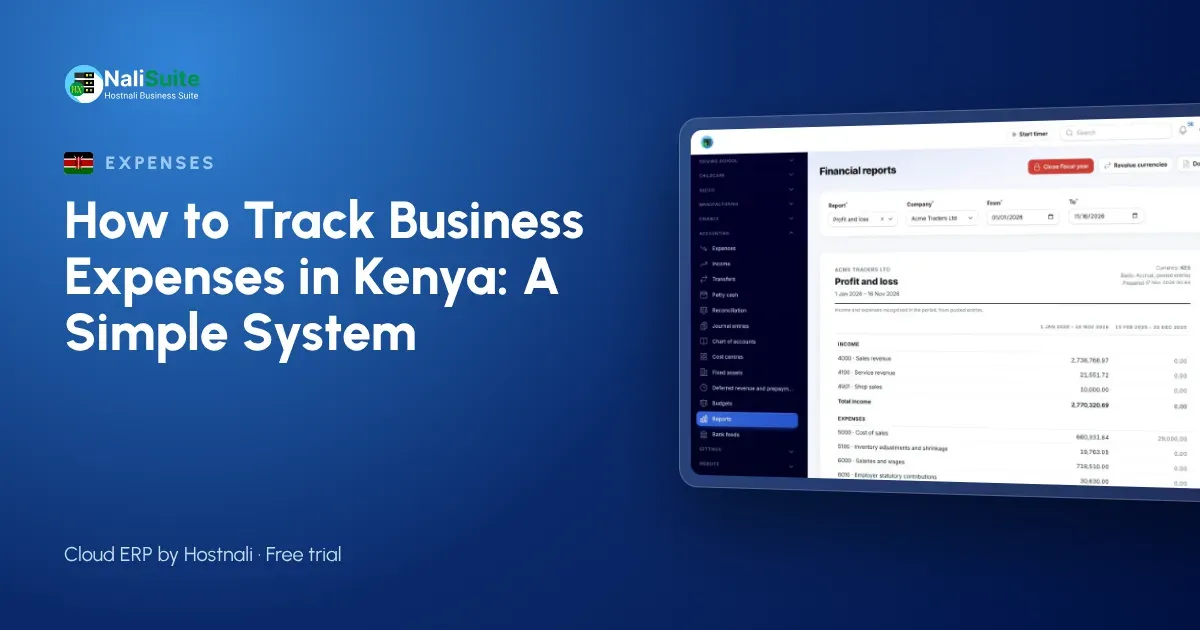
In many Kenyan businesses, expenses live in three places: the M-Pesa message history, a drawer full of paper receipts and the owner’s memory. Then month end comes, or KRA asks a question, or the accountant needs the figures, and nobody can say exactly what was spent on what.
Tracking expenses does not need to be hard. It needs a simple system that everyone follows. This guide sets one up in five parts: capture, categorise, approve, pay and reconcile.
Part 1: Capture every expense when it happens
The biggest cause of missing expenses is waiting. A receipt kept for “later” is a receipt lost. Make capture immediate:
- Paper receipts: photograph them the same day, then file the paper in a monthly envelope.
- M-Pesa payments: use the paybill or till number with a clear account reference, and save the confirmation.
- Supplier invoices: keep the PDF or a photo, not just the payment.
- Cash payments: write a petty cash voucher with the date, amount, purpose and who received the money.
If a supplier cannot give a receipt – a mkokoteni pusher, a casual loader – record the payment on a voucher signed by the person paid. For costs you may want to claim for tax, an ETR or eTIMS receipt from the supplier is the safer record; check what KRA accepts for your situation.
Part 2: Use a short list of categories
Too many categories and people pick at random; too few and you learn nothing. Start with ten to fifteen that match how your business spends:
| Category | Examples |
|---|---|
| Stock and materials | Goods for resale, raw materials |
| Transport | Fuel, boda boda, matatu fares, courier |
| Rent and premises | Rent, service charge, repairs |
| Utilities | Electricity tokens, water, internet |
| Staff | Salaries, casual wages, staff meals |
| Marketing | Adverts, printing, sponsored posts |
| Phone and data | Airtime, bundles |
| Bank and M-Pesa charges | Transaction and withdrawal charges |
| Professional fees | Accountant, lawyer, consultants |
| Equipment | Tools, computers, furniture |
Your accountant can map these to the chart of accounts. What matters is that everyone uses the same list.
Part 3: Agree who can spend what
Unapproved spending is where money leaks. Set simple rules:
- Small daily costs up to a set amount: the shop manager decides.
- Larger amounts: the owner approves first.
- Stock and supplier orders: always through a purchase order.
In NaliSuite purchases, approval rules can be set by amount for purchase orders, bills and expenses, so anything over the limit waits for the right person. Staff can submit expense claims from their phones with a photo of the receipt through employee self-service, and managers approve with a tap.
Part 4: Pay in a traceable way
Every payment should leave a trail. Prefer:
- M-Pesa paybill or till numbers with a reference,
- bank transfers with the invoice number in the narration,
- a petty cash float that is topped up only against vouchers.
Avoid paying business costs from your personal M-Pesa line. It mixes your money with the business’s and makes tracking almost impossible.
Part 5: Reconcile every month
Reconciling means checking that every payment on your bank and M-Pesa statements has a matching, categorised expense in your records, and the other way round. It catches missed receipts, duplicate entries and payments nobody can explain.
With NaliSuite accounting, you import statements or connect bank feeds, and transactions are matched with suggestions. Bank and M-Pesa reconciliation shows what is still unmatched so you can chase the missing receipt while people still remember.
Save time on typing
Typing in supplier bills and receipts takes hours each month. The Document AI add-on reads PDF bills and phone photos of receipts – supplier, dates, lines, VAT and totals – and lets you check them before saving them as a draft bill or an expense. It uses your own Anthropic API key.
A month in practice
A sample hardware shop in Kisii runs this system. Each evening, the manager photographs the day’s receipts and enters petty cash vouchers. On Fridays, the owner approves the week’s claims and supplier bills. On the first working day of the month, the bookkeeper reconciles the bank and M-Pesa statements and sends the owner a one-page summary of spending by category. When fuel costs jumped one month, the owner spotted it in the summary and found a delivery van was being used for personal trips.
Review spending weekly
A ten-minute look at the week’s expenses every Friday catches problems early, long before month end.
Frequently asked questions
What is the easiest way to start?
Pick your categories, set up a petty cash book, and photograph every receipt from today. Clean up the past later.
How long should I keep receipts?
Keep them for as long as the tax rules require. Check the current period with KRA; storing photos as well as paper makes this easier.
Should I track very small expenses?
Yes. Small daily costs like transport and airtime add up to large amounts over a year.
Try NaliSuite
NaliSuite captures expenses, approvals, payments and reconciliation in one place, so every shilling is accounted for. Plans start at Ksh 250 a month with a free trial. See the plans.